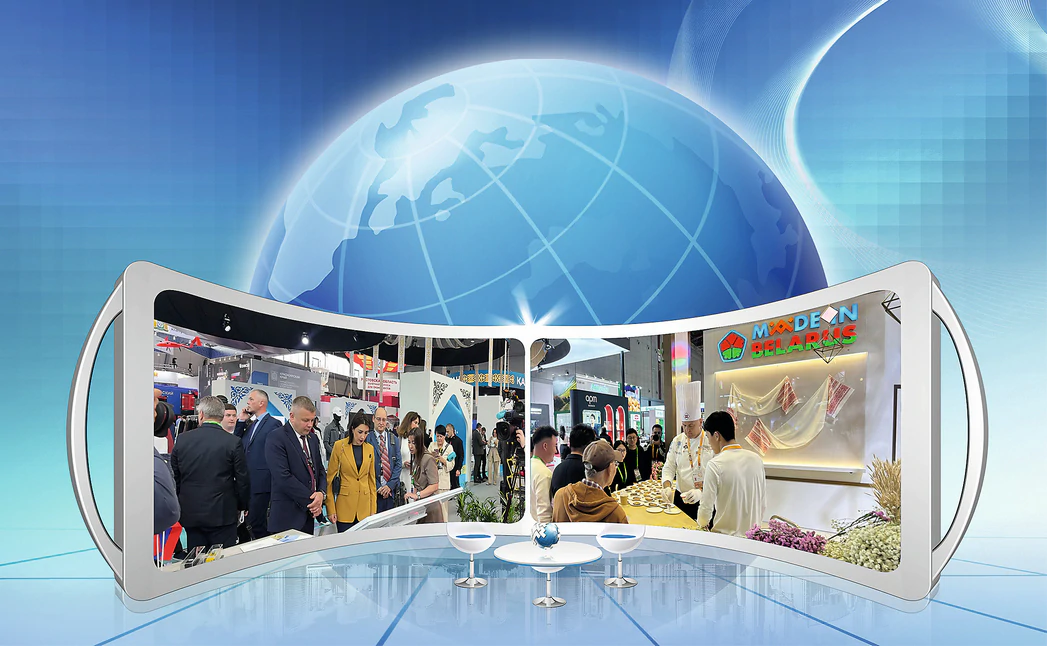
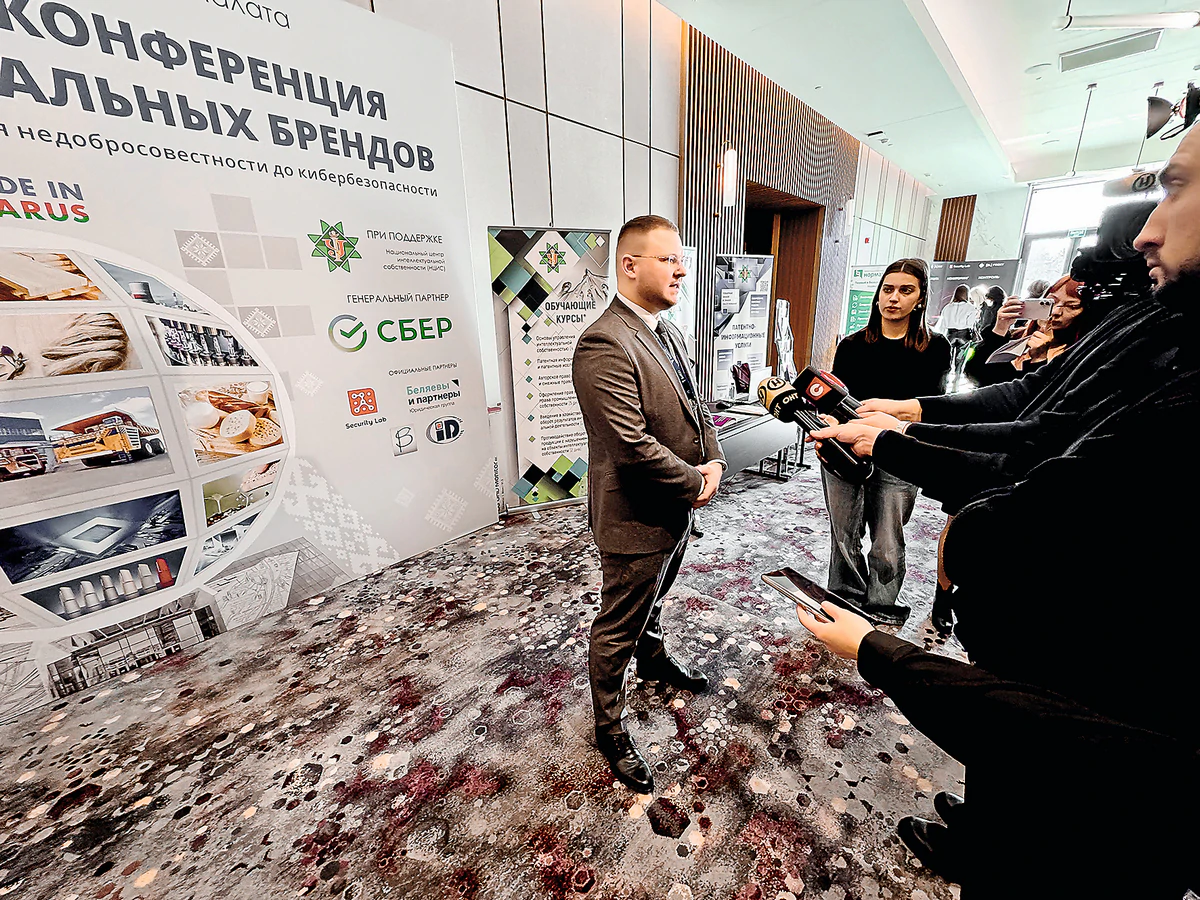
Belarusian enterprises have been steadily exploring the African market for many years. Here, the products of Belaruskali, BelAZ, MAZ, MTZ, Gomselmash, BMZ, Belshina, Bellegprom and other companies have been long and successfully challenging not only local but also Western brands.
In January-November 2024, shipments to Africa grew by 3.6 times compared to the same period of 2023. Exports to the Eastern part of the continent grew by 14.4%, to West Africa - by 85.2%, to North Africa - by 4.3 times, to Southern Africa - by 6.2 times, and to Central Africa - by 28 times. In terms of value, the largest volumes went to Tunisia (53-fold growth), Egypt (+7.6%), Algeria (65-fold growth), Angola (26-fold growth), Ethiopia (4.7-fold growth), Nigeria (2.6-fold growth) and South Africa (5.1-fold growth). Africa’s share in Belarusian exports more than tripled, fr om 0.45 to 1.59%.
One must admit however, that the number of our enterprises that have adapted to African realities is still small and their exports are not very diverse. Meanwhile, the African market is undergoing tremendous changes. That is why, in order to secure a head start in the Africa’s tomorrow, rather than get stuck in its past, it is vital to open new horizons beyond the traditional forms of presence.
So why should next years be considered pivotal for the continent's economy?
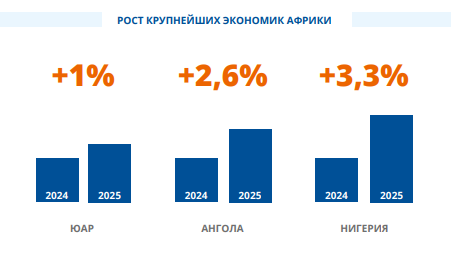
Africa's economy is expected to become the world's second fastest growing one in 2025, with almost all of the continent's countries faring better than the year before. 15 out of the 20 fastest economies in the world are African. Growth projections for 2025 range between 3.7-4.3 %, compared to a de facto 3.4-3.7 % last year, with a further expected increase by 4 % in 2026. The expansion will be mainly driven by the continent's largest economies: Nigeria (+3.3%), Angola (+2.6%) and South Africa (+1%).
External and intra-regional trade, industry, services and infrastructure are likely to become the focal points of the economic boom. Foreign investments are expected to continue growing, especially in mining, renewable energy, information and communication technology, food processing, pharmaceuticals, e-commerce and logistics.
In addition, this market is slowly but steadily integrating, erasing internal barriers, facilitating transactions and shaping new transcontinental and regional supply chains. With the launch of the African Continental Free Trade Area (AfCFTA) on 1 January 2021, the largest single trade space on the world map has emerged, spanning 54 nations. As a direct consequence, investment in road, rail and port infrastructure hit a record USD 75 bn in 2024, half of which went to Nigeria, Kenya and South Africa.
The African Union estimates that the AfCFTA has the potential to boost intra-African trade by 52.3% by cancelling import duties and reducing non-tariff barriers. The Pan-African Payments and Settlement System, a vital ACFTA tool, is developing rapidly. It already facilitates cross-border transactions in local currencies, reducing reliance on foreign monies and bringing down transaction costs. This impact is particularly visible in the growing fintech and sustainable finance sectors, wh ere cost efficiency and accessibility are paramount.
Another notable trend is the shift of local businesses away fr om traditional, i.a. post-colonial, ties, diversifying into new foreign markets. Ex-metropolies retain their influence through ownership of key assets, a near-total monopoly on tech products and grant aid. But they are increasingly losing ground on short- and medium-term indicators such as trade.
According to the Centre for African Studies at the National Research University “Higher School of Economics” (Moscow), Africa's trade with non-Western countries is growing year by year, while the proportion of the West is gradually declining. Between 2012 and 2021, the US saw its share shrink from 8 to 5 per cent, France - from 6 to 5 per cent, Italy - from 6 to 4 per cent, and the UK - from 4 to 2 per cent. By contrast, China, UAE, Turkey and Russia have significantly solidified their positions. African companies are looking to localise their manufacturing and join global chains not just at the raw material level, but at the primary/secondary processing stage.
Nowhere else in the world is the population, especially in cities, growing as fast as in Africa, creating the world's youngest and most expansive customer base. The continent's population is expected to reach 2.5 billion by 2050, with 60% of it under the age of 25 and over 50% living in cities. This will generate a huge demand for decent jobs, quality education, housing, food, nutrition, health care, amenities, innovative goods and services. It appears unlikely that these needs can be met from local resources alone.
Already now, Africa annual food imports amount to USD 80 bn (a 5-fold increase since 2000), and by 2030 this figure may reach USD 110 bn. Belarusian dairy products and sugar find good demand in countries like Algeria, Egypt, and Ghana. On the other hand, countries of the continent urgently need equipment and machinery, materials and technologies for production and processing of agricultural products. As a consequence, purchases of Belarusian tractors, agricultural machinery and fertilisers are increasing year by year.
Africa is experiencing a construction boom spurred by rapid urbanisation and transcontinental logistical projects. According to some reports, there is a total of 570 urban development projects on the continent, costing altogether USD 450 bn. Energy projects account for USD 370 bn, and transport infrastructure for USD 280 bn. As a result, Belarusian construction equipment and materials, metal products and qualified engineering services are particularly required.
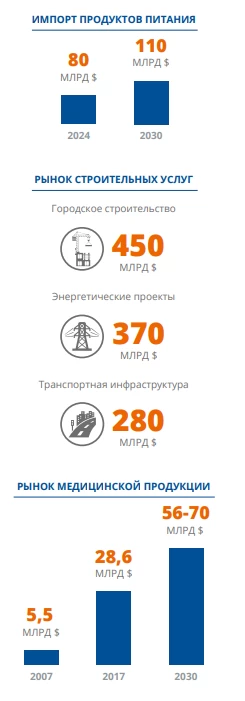 Experts estimate that Africa is the only region in the world wh ere demand for medical products keeps growing at an explosive pace, from USD 5.5 bn in 2007 to USD 28.6 bn in 2017, and has every chance to reach USD 56-70 bn by 2030. The still underdeveloped domestic production means that African countries are constrained to buy 90 per cent of their medicines and 99 per cent of vaccines elsewhere.
Textiles, clothing and footwear are another fast-growing segment of the local market that matches the export propensity of the Belarusian industry. In 2024, the revenue in the African apparel market totaled USD 73.6 bn, projected to grow by 4.8% annually. The footwear sector is valued at USD 19.2 bn, with a prospect of a 3.6% annual growth. Local designers and mushrooming ‘haute couture’ brands are actively gaining popularity in Europe and the US. This creates opportunities not only for marketing of our ready-made products, but also for joint co-operation/investment schemes.
The continent's countries are among the world's leading importers of educational services. As of 2020, 624,000 African students were studying abroad (10% of the world’s total). The corresponding expenditures of their countries amounted to USD 13 bn. About 2 000 students from 30 African countries study in Belarusian universities, and this number has every chance to continue growing.
Finally, digitalisation should be considered an important niche for future Belarusian-African cooperation. In 2024, the information and communication technologies sector increased by 12% and by 2050, the entire African digital technologies market is set to reach USD 712 bn. Between 1992 and 2024, the World Bank alone invested more than USD 15.5 bn into ICT-heavy African projects, mainly in Nigeria, Kenya, Egypt, Ethiopia, DRC, and Egypt. Last year alone, venture capital investment in the industry totaled USD 3 bn, 60% of which went to Nigeria, Kenya and South Africa, consolidating their status as regional innovation hubs.
External players (e.g. China) and multinational tech giants are also investing massively into digital infrastructure and training. Google alone allocated USD 1 bn for 2021-2026, expecting every dollar invested in digitalisation to translate into two dollars of added value for the African economy by 2030.
According to Google's projections, the next 10 years will become the ‘digital decade’ for Sub-Saharan Africa. While internet coverage on the continent now corresponds to the early 2000s level in the US and Europe, the coming years will see more than half of the African population finally enjoying internet access. In major cities, the coverage already surpasses 90 per cent with 5G standard widely operational.
The best opportunities in the African ICT market appear to lie in the following areas:
-
Fintech. African countries account for 66% of global mobile transactions, or USD 800 bn in 2024. Examples of the already existing local e-services include Kenya's “M-Pesa”, Nigeria's “Flutterwave”, “Paystack” and “Zeepay” (Ghana).
-
Agritech. Solutions for precision farming, smart irrigation, soil analysis, matching sellers and buyers of finished products (e.g. “Twiga Foods”, Kenya), and drones are in particular demand.
-
Medtech. Here the focus is on services for remote diagnostics, telemedicine, and enabling access to medicines (e.g. “mPharma”, Ghana).
-
Edtech market features primarily technologies for distance learning, including for IT disciplines, like “Nafham” (Egypt), “GoMyCode” (Morocco).
The experience of our neighbours also points at niches existing in high value-added export segments. In 2024, supplies of industrial products from Moscow Region alone to Africa grew by 20%, including instrument-making products - by 16%, pharmaceuticals and medical equipment - by 18%, and light industry goods - by 5 times.
Naturally, one should take into account the well-known risks of working on the continent. These include gaps in economic law, slow administrative procedures, poor data security, unscrupulous partners, underdeveloped logistics, military and political instability, differing “their” and “our” business mentality, etc. Obviously, the contrast between solvent and insolvent demand is greater here than anywhere else, so that a favourable or, on the contrary, harsh business climate across the continent on the average often does not reflect the de facto situation in a specific part of the continent.
This is why special care must be taken in selecting and studying target markets, finding and vetting local counterparties, calculating logistics, drawing up contracts, and taking every possible precaution against force majeure or default. All these aspects were tackled in detail at the International Legal Forum ‘Africa: Legal Aspects of Doing Business’ organised by the BelCCI in October 2024, which confirmed a high interest of Belarusian companies toward this market. Trade services of the Belarusian diplomatic missions in Egypt, Zimbabwe, Kenya, Nigeria, South Africa and the network of honorary consuls of the Republic of Belarus in 8 major cities of the continent are always ready to offer our businesses the necessary on-site support and assistance.
Thus, our country already maintains a firm economic foothold in Africa. Its horizons, albeit not always cloudless, are increasingly drawing the attention of the most astute, calculating and purposeful ‘captains’ of our economy. For some of them, the continent has already become an open gateway to the world market. For others, it is still a promising road, which, as popular wisdom has it, can be mastered only by walking.


 Subscribe to news